Blog Posts
How to Use Naloxone Nasal Spray in an Overdose
Jul
Someone who has taken an opioid may not look obviously sick at first. They may simply seem unusually sleepy, hard to wake, or confused. But when breathing becomes slow, shallow, irregular, or stops, every minute matters. Knowing how to use naloxone nasal spray can give a person a chance to breathe again while emergency help is on the way.
Naloxone is an opioid-overdose reversal medicine. It can temporarily block the effects of opioids, including fentanyl, heroin, oxycodone, hydrocodone, morphine, methadone, and prescription pain medicines. It does not reverse an overdose caused only by stimulants, benzodiazepines, alcohol, or other non-opioid drugs. Still, if you are unsure what was taken and opioid overdose is possible, use naloxone. It will not harm someone who has not taken opioids.
Recognize a suspected opioid overdose
Do not wait for certainty. Treat the situation as an overdose if a person cannot be woken by calling their name, rubbing the center of their chest firmly with your knuckles, or gently shaking their shoulders.
Other warning signs include very slow or stopped breathing, choking or gurgling sounds, limp muscles, pale or clammy skin, gray or blue lips and fingernails, and very small pupils. A person may make snoring-like sounds, but this is not normal sleep if they cannot be awakened.
Fentanyl can be present in drugs sold as pills, powders, or other substances without the user knowing. A person does not need to intend to use an opioid to experience an opioid overdose. When in doubt, act quickly.
How to use naloxone nasal spray step by step
Call 911 first, or tell someone nearby to call. Naloxone is temporary, and emergency care is still necessary even if the person wakes up. If you are alone, call 911 on speakerphone so you can begin helping immediately.
Lay the person on their back. Open the naloxone package and remove the device. Do not test or prime it. A nasal-spray device contains one dose, and pressing the plunger before it is in the nose can waste the medicine.
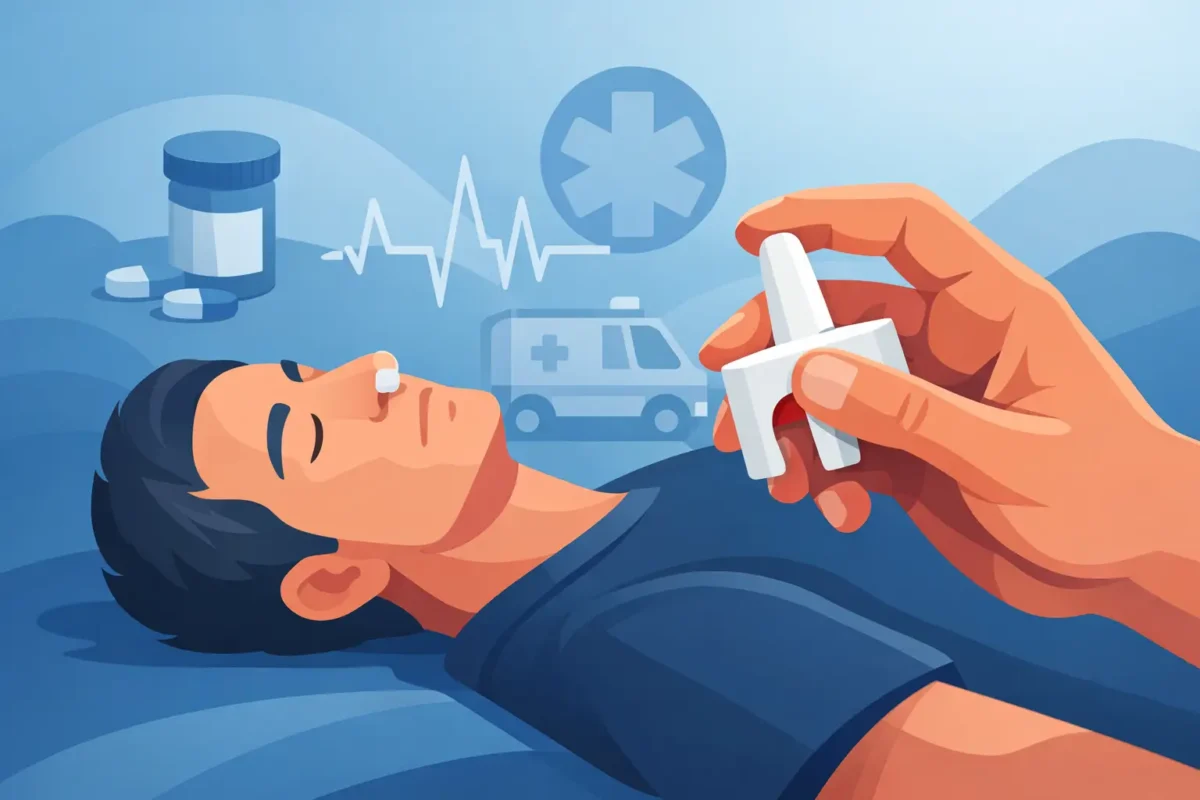
Hold the device with your thumb on the bottom of the plunger and your first and middle fingers on either side of the nozzle. Gently support the back of the person’s neck and tilt their head back. Insert the tip into one nostril until your fingers touch the bottom of the nose.
Press the plunger firmly to release the full dose. You do not need to spray both nostrils. You do not need to wait for the person to inhale. The medicine is absorbed through the lining of the nose.
After giving naloxone, move the person onto their side in the recovery position if they are breathing on their own. Bend the top knee forward and angle their face slightly downward. This position helps keep the airway open and lowers the chance of choking if they vomit.
Stay with them and watch their breathing. If you are trained in rescue breathing or CPR, start it when needed. If the person is not breathing normally, rescue breaths can be especially valuable while waiting for naloxone to take effect and for emergency responders to arrive.
If the first dose does not work
Naloxone often begins working within two to three minutes, but not every overdose responds after one dose. Potent opioids, including fentanyl, may require additional doses.
If the person has not woken up, has not started breathing normally, or improves and then becomes unresponsive again, give another dose after two to three minutes. Use a new nasal-spray device and give the dose in the other nostril if possible. Continue giving a new dose every two to three minutes until the person responds or emergency professionals take over.
A response may be gradual. The person may begin breathing more regularly before they can speak or sit up. Keep monitoring them rather than assuming the emergency is over.
What to expect after naloxone works
Naloxone can trigger sudden opioid withdrawal in a person who is physically dependent on opioids. They may wake up anxious, sweaty, nauseated, irritable, shaky, or in pain. Some people may feel confused or angry because they do not understand what happened.
Speak calmly and use direct language: “You stopped breathing. I gave you naloxone. Help is coming.” Do not argue, shame, or leave them alone. Withdrawal feels unpleasant, but returning to opioid use can be dangerous because the naloxone may wear off before the opioid does.
The effects of naloxone can fade in 30 to 90 minutes, depending on the product and the opioid involved. Overdose symptoms can return after the person seems better. That is why calling 911 and staying with the person are not optional steps.
Common mistakes to avoid
Do not make the person walk around, put them in a cold shower, force food or drinks, or try to make them vomit. These actions do not reverse an overdose and can cause injury or choking.
Do not delay naloxone while looking for proof of what was used. You do not need to identify the substance before responding. You also do not need medical training to use the nasal spray.
Avoid giving only one dose and then leaving. A single device is not always enough, particularly when fentanyl or long-acting opioids may be involved. Keep multiple doses available when possible.
Finally, do not assume someone is safe because they are snoring. If they cannot be awakened and their breathing is slow or abnormal, treat it as an emergency.
Keep naloxone ready before an emergency
Naloxone is most useful when people can find it quickly. Keep it in a known, accessible place rather than buried in a bag, locked away, or stored in a hot car. Check the package occasionally for damage and expiration information. Follow the storage directions on the product label.
Tell household members, friends, or coworkers where it is and how to use it. The person who carries naloxone may be the one who overdoses, so someone else needs to know where the spray is kept. If opioids are present in a home, whether prescribed or not, having naloxone available is a practical safety measure.
Many communities offer naloxone through pharmacies, health departments, community programs, and overdose-prevention organizations. Availability and rules vary by state, but asking a pharmacist about naloxone is a straightforward place to start.
After the emergency
When emergency responders arrive, tell them what you observed, when naloxone was given, how many doses were used, and whether the person’s breathing changed. Give them the used devices if they ask. Even if the person insists they feel fine, medical evaluation is still the safest option because the overdose can return.
An overdose can be frightening for everyone involved. Afterward, consider replacing used naloxone promptly and talking with a health professional or local support service about safer medication storage, substance-use treatment, or other support. The immediate goal is simple: call 911, give naloxone, support breathing, and stay until help takes over. A spray kept nearby and used without hesitation can turn a crisis into a survivable moment.