Blog Posts
Meth Overdose Warning Signs That Need 911
Jul
A person who has taken meth may look intensely alert one minute and become dangerously overheated, confused, or unresponsive the next. Do not wait for them to “sleep it off” if something feels wrong. Knowing meth overdose warning signs can help you act before a medical emergency becomes fatal.
Methamphetamine overdose is not always a single, obvious event. It can develop after a large amount, repeated use over hours or days, an unknown-strength product, or combining meth with alcohol, opioids, benzodiazepines, cocaine, or other substances. The safest response is fast action, not guesswork.
Meth Overdose Warning Signs That Need Emergency Help
Call 911 right away if someone has severe symptoms after using meth or another stimulant. Tell dispatch that you believe a drug overdose may be involved. Emergency responders need accurate information to treat the person quickly, not a perfect explanation of what happened.
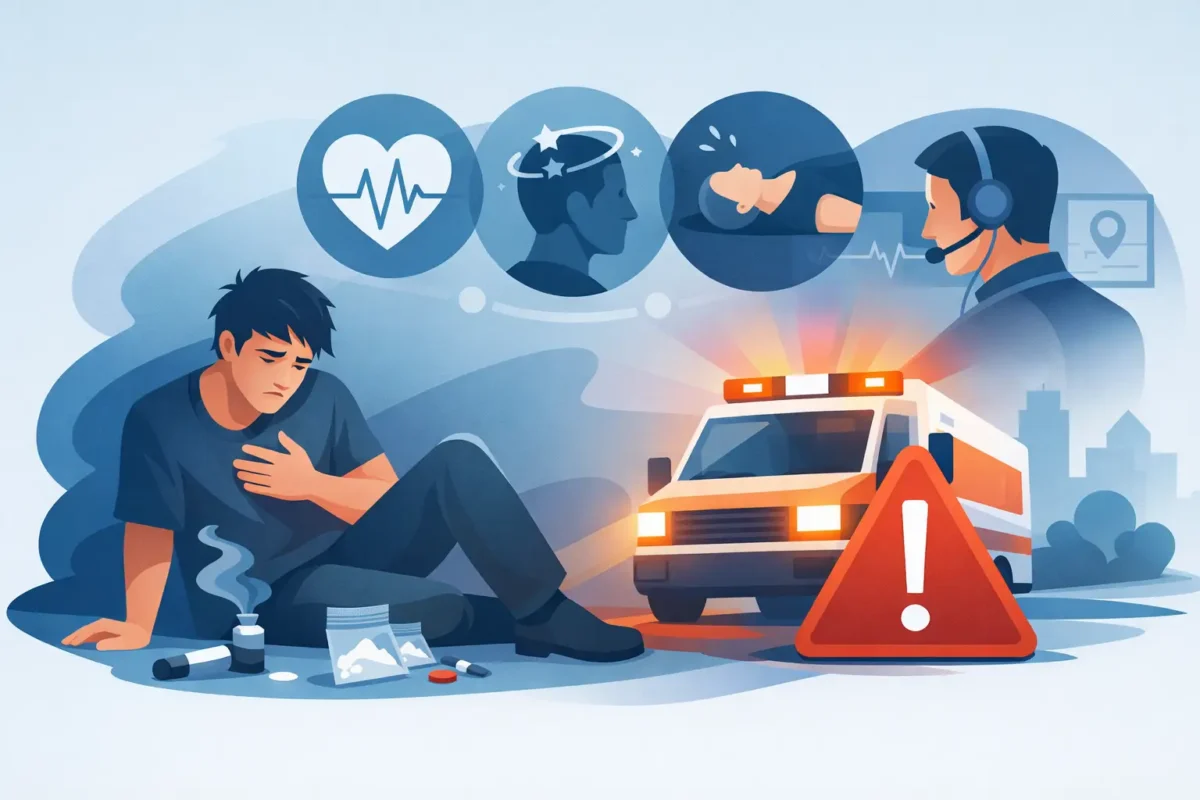
The most urgent warning signs include chest pain, pressure, or a pounding or irregular heartbeat. Meth can put extreme strain on the heart and blood vessels, increasing the risk of heart attack, stroke, or dangerous heart rhythms even in younger people.
Watch for severe overheating. Skin may feel very hot, flushed, sweaty, or sometimes dry. The person may complain of feeling unbearably hot, develop a high fever, or stop making sense when they speak. Overheating can rapidly damage the brain, kidneys, muscles, and other organs.
A serious overdose can also cause extreme agitation, panic, paranoia, hallucinations, or violent confusion. Someone may pace, shout, pick at their skin, insist people are trying to hurt them, or become impossible to calm. This is not a situation to handle alone or through confrontation. Keep distance if needed, speak slowly, and get emergency help.
Other emergency signs include seizures, fainting, collapse, severe headache, weakness on one side of the body, trouble speaking, blurred vision, repeated vomiting, blue or gray lips, slow or irregular breathing, or being unable to wake up. Any loss of consciousness is an emergency.
What Meth Overdose Can Look Like in Real Time
Not every overdose looks the same. Some people appear hyperactive and distressed. Others become quiet, confused, or suddenly pass out. The difference often depends on how much was used, whether other drugs are involved, a person’s health history, and the actual contents of the substance.
Stimulant toxicity often starts with a racing pulse, anxiety, tremors, sweating, jaw clenching, rapid breathing, and restlessness. As it worsens, thinking may become disorganized and the body may no longer regulate temperature well. Severe dehydration, chest pain, seizures, stroke-like symptoms, and collapse can follow.
There is another risk that deserves special attention: an unregulated or unknown drug can contain more than expected, different stimulants, or opioids. If someone is unusually sleepy, has pinpoint pupils, is breathing slowly, makes gurgling or snoring sounds, or cannot be awakened, treat it as a possible opioid overdose too. Meth alone more often causes agitation and a fast pulse, but mixed-drug emergencies are common enough that assumptions are dangerous.
What to Do While Waiting for 911
First, call 911 and stay with the person if it is safe to do so. Give the dispatcher the address, describe the symptoms, and mention any substances you know or suspect were used. You do not need to know the amount or the exact product for responders to start helping.
If the person is awake, move them to a quieter, cooler area away from crowds, bright lights, arguments, traffic, or weapons. Encourage them to sit or lie down if they are dizzy, but do not physically restrain an agitated person unless there is an immediate danger and trained help is present. Restraint can worsen panic, overheating, and injury.
If they are hot, loosen or remove extra clothing and use cool wet cloths or a fan. Avoid ice baths or forcing them into freezing water, which can cause shock and make the situation harder to manage. Do not force food, water, coffee, alcohol, or medications. A confused or drowsy person can choke.
If they are unconscious but breathing, place them on their side in the recovery position, with their mouth angled toward the ground. This helps keep the airway clear if they vomit. Check their breathing repeatedly.
If they are not breathing normally, only gasping, or have no pulse, begin CPR if you know how and follow the dispatcher’s instructions. Use an AED if one is available. If opioid exposure is possible and naloxone is available, give it as directed. Naloxone does not reverse meth toxicity, but it can reverse an opioid overdose and is unlikely to harm someone if opioids were not involved. Continue rescue breathing or CPR as instructed until help arrives.
If a seizure happens, clear hard or sharp objects away, cushion the person’s head, and time the seizure. Do not hold them down. Do not put anything in their mouth. Call 911 if you have not already done so, especially if the seizure lasts more than five minutes, repeats, or the person does not regain awareness.
What Not to Do During a Meth Emergency
Do not try to manage suspected overdose symptoms with more substances. Taking alcohol, benzodiazepines, opioids, sleep medications, or another stimulant to “balance things out” can turn a stimulant crisis into a breathing emergency. Mixing substances also makes it much harder for medical teams to identify what is happening.
Do not let embarrassment delay a call for help. People often fear getting in trouble, being judged, or exposing drug use. But chest pain, overheating, severe confusion, seizures, and altered breathing can become life-threatening in minutes. Medical care is the priority.
It is also unsafe to leave someone alone because they seem calmer. A person can become exhausted after prolonged stimulation, develop delayed chest symptoms, or lose consciousness when a mixed substance takes effect. Stay nearby until emergency professionals take over, or until the person has been evaluated if emergency services advise another option.
After the Immediate Crisis
Surviving the first few hours does not always mean the danger is over. A person may need observation for heart complications, kidney injury, dehydration, muscle breakdown, severe anxiety, psychosis, or delayed neurological symptoms. Follow the discharge instructions from the medical team, including advice about follow-up care.
For someone who uses meth regularly, an overdose scare can be a difficult moment to talk about support without blame. The next step may be a primary care visit, addiction medicine provider, mental health professional, local treatment program, or a trusted person who can help make a plan. What helps depends on the person: some need urgent medical stabilization, some need support for stimulant use disorder, and some need care for trauma, depression, housing instability, or other pressures tied to use.
If you are worried about yourself, do not wait until symptoms become dramatic. Chest discomfort, severe anxiety, uncontrolled shaking, overheating, hallucinations, or a fast or irregular heartbeat after meth use are reasons to seek urgent medical attention. Your body does not need to prove it is an emergency before you ask for help.
The most helpful thing you can do in a suspected overdose is simple: call 911 early, stay calm, protect the person’s airway and surroundings, and let trained responders take it from there.